



About Rhinoplasty surgery
Rhinoplasty (nose surgery) is a procedure that reshapes the bone, cartilage, and soft tissue of the nose.
A nose reshaping surgery can be performed for cosmetic reasons, to improve facial balance, or for medical reasons, such as correcting breathing difficulties caused by structural issues.
Cosmetic & functional benefits
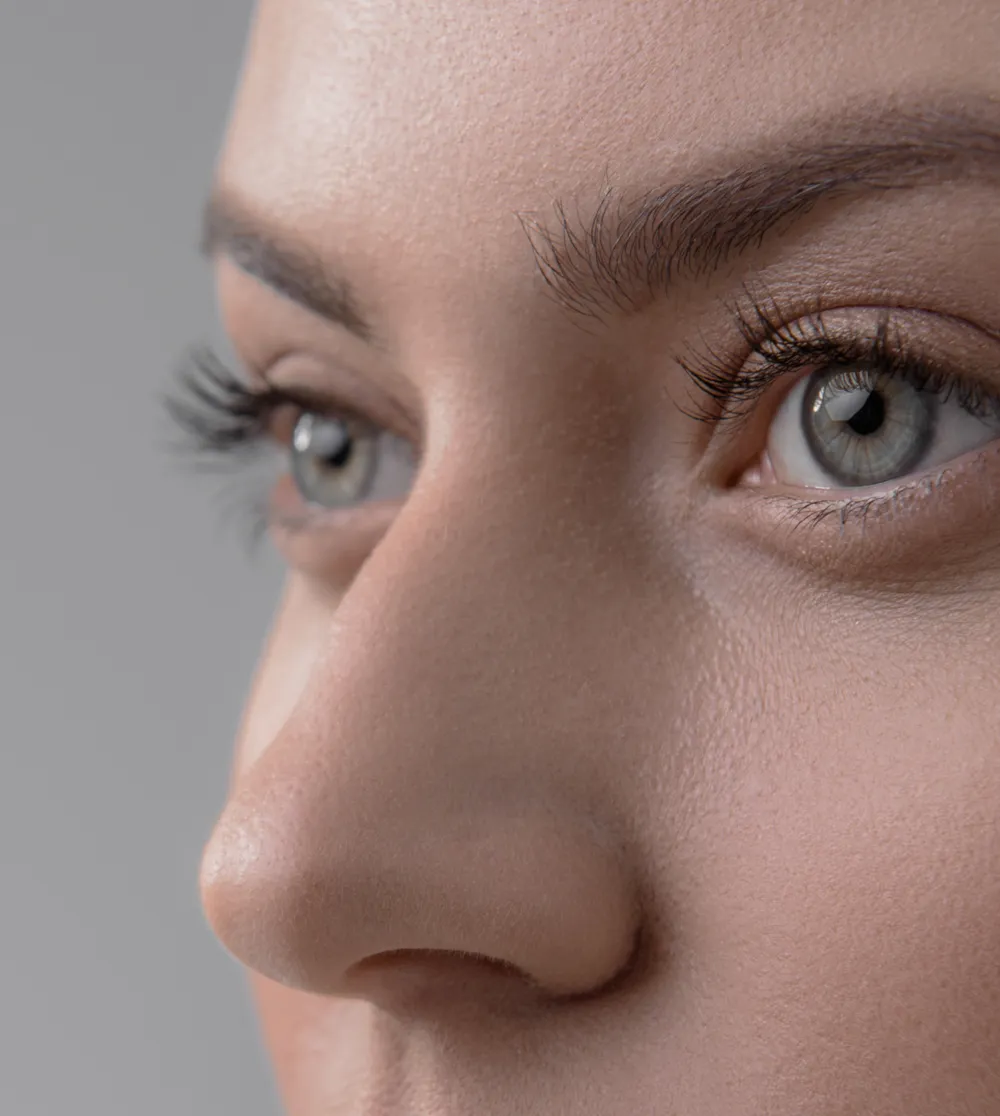
Rhinoplasty can enhance facial balance by refining the shape and proportions of the nose, boosting confidence and overall satisfaction with one’s appearance.
Functionally, it can improve airflow by addressing structural issues, which may lead to easier breathing, better sleep quality, and even reduced snoring in some cases. The procedure can also correct congenital abnormalities or injuries, restoring both the form and function of the nose.
What can be treated?
Cosmetic rhinoplasty can address:
• The size and shape of the nose
• The width of the nasal bridge
• The appearance of humps or depressions on the bridge
• The shape of the nasal tip
Functional rhinoplasty can help with:
• Breathing problems caused by a deviated septum
• Other structural issues affecting airflow
The procedure
A rhinoplasty surgery is thoroughly planned and executed, tailored to meet your aesthetic and functional needs. Your safety is a top-priority through the whole process. This is how it is typically done.

Pre-op
Before rhinoplasty, you will have a detailed consultation with your surgeon. This is an opportunity to discuss your goals, concerns and expectations for the procedure. The surgeon will examine your nasal structure, facial features and skin quality to create a tailored surgical plan. In some cases, imaging tests may be used to examine the internal structure of your nose.
Before your nose surgery, you will be advised to:
- Avoid certain medications, especially aspirin or anything that may increase bleeding or bruising in the area
- Stop smoking
- Arrange for a recovery period
Learn more about how to prepare for rhinoplasty.
Anaesthesia
Nose surgery is performed under anaesthesia to ensure a painless procedure. The choice of anaesthesia used depends on the complexity of the surgery and will be decided during your pre-surgery consultation, based on your medical history and the specifics of your operation.
- Local anaesthesia with sedation
Suitable for less invasive procedures. You will be awake but relaxed, and the nose will be numbed to block pain. Stronger sedation may be an option, depending on your preference and discussion with your surgeon and anaesthetist.
- General anaesthesia
Used for more complex surgeries. You will be fully asleep, and a breathing tube will be used to assist your breathing.
An anaesthetist will monitor you throughout the procedure to ensure your safety and comfort.
Incision
There are three main techniques for making incisions in rhinoplasty: open, closed, and ultrasonic. The choice depends on the complexity of the procedure and the desired changes.
- Open rhinoplasty
The incision is made across the small strip of tissue between the nostrils (columella). This approach gives the surgeon full access to the nasal structure, which is why it is often used for more complex procedures. - Closed rhinoplasty
All incisions are inside the nostrils, leaving no visible scars. While visibility is more limited, closed rhinoplasty is often suitable for minor adjustments and typically results in less swelling and a quicker recovery. - Ultrasonic rhinoplasty
A newer technique that uses ultrasonic energy to reshape the nasal bones with high precision, reducing trauma to surrounding tissues and potentially minimising bruising and swelling.
Reshaping the
nose structure
The main part of the procedure is reshaping the nose. If the septum is deviated, it can often be straightened at the same time. The surgeon carefully adjusts the nasal structure to improve both appearance and function, using one or more of the following techniques.
- Modifying bone and cartilage
Excess bone and cartilage may be removed or repositioned to achieve the desired shape. In cases where more volume is needed, grafts from other parts of the body (often the septum, ear, or rib) may be used. - Refining the tip
The nasal tip can be refined using sutures or cartilage grafts, which help adjust its shape, definition, and rotation with precision. - Adjusting the nasal bridge
The surgeon may reduce a hump on the nasal bridge by carefully removing bone and cartilage. Alternatively, if augmentation is needed, grafts can be used to build up the bridge, giving it the underlying structure it needs for a permanent result.
Closing the
incision
Once the procedure is complete, the surgeon carefully closes the incisions. In open rhinoplasty, the small incision on the columella is sutured with precision to keep scarring minimal. In closed rhinoplasty, all incisions are inside the nostrils, meaning there are no visible scars.
Most internal sutures dissolve on their own, while any external stitches are usually removed within a week. To help the nose heal and maintain its new shape, splints and packing may be used for support during the initial recovery phase.
Recovery
Recovering from nose surgery takes time, and the first week often comes with some swelling and bruising around the nose and eyes. This will gradually improve, and you can help support the healing process nu following these tips.
- Rest and keep your head elevated
- Apply cold compresses, avoiding direct pressure on the nose
- Avoid strenuous activities for at least 3-6 weeks
- Follow your surgeon's instructions for cleaning the nasal area
- Attend your follow-up appointments
Recovery time varies, but most people can return to work and normal activities within two weeks. However, it can take up to a year or more for the nose to fully heal and settle into its final shape. During this period, it’s important to take proper care of your nose.
The result
The results of rhinoplasty are permanent. As the swelling goes down and the nose gradually settles, the changes will become more noticeable, and the final result will appear after up to 18 months.
More about
rhinoplasty
It's normal to feel concerned or anxious before rhinoplasty. Learning about the procedure, its safety, and potential risks puts you in the driver’s seat and can help you feel more prepared and confident in your decision.

Safety and
potential risks
Rhinoplasty surgery comes with some risks, but patient safety is always the top priority. Certain complications may require extra attention, including:
• Breathing difficulties
• Infection
• Vomiting or nausea
• Intense pain
• Significant bleeding
• Dissatisfaction
• Scarring
Questions to ask
during consultation
Your consultation is the perfect time to gather information, express your desires and concerns, and establish a rapport with your surgeon. Consider asking the following questions:
• What is your experience with rhinoplasty?
• When was the last time you did a procedure like this?
• Can I see before-and-after photos of your previous rhinoplasty patients?
• What surgical technique do you recommend for my specific case, and why?
• What can I expect in terms of recovery and the timeline for seeing results?
• How do you handle revisions if the results don't meet my expectations?
• What are the potential risks and complications, and how are they managed?
Non-surgical
rhinoplasty
Non-surgical rhinoplasty is an option for those looking to make minor changes without surgery. It involves injecting dermal fillers into specific areas of the nose to alter its shape. The procedure is quick, requires no downtime and results are immediately visible. In some cases, it can even be reversed, depending on the type of filler used.
However, it cannot make the nose smaller or correct internal structural issues. The results are also temporary, usually lasting between 6 and 18 months. People who have had previous rhinoplasty may not be suitable candidates.
Talking to your surgeon about both surgical and non-surgical options can help you decide what’s best for you.